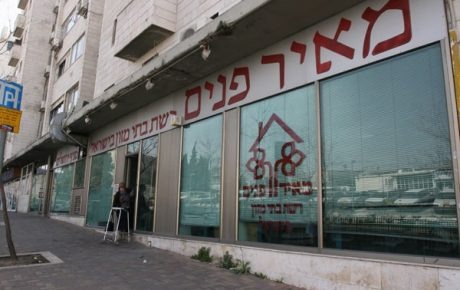
Aid organizations for the needy are a quiet yet critical part of life in Israel. They do not always make headlines and are not always visible, but without them many people would be left without real support. These organizations arise from needs identified on the ground, not from top-down decisions. They recognize distress, step in, and try to provide simple and direct solutions.
Many people ask why aid organizations are necessary when there is a state and a welfare system. The answer lies in everyday reality: not every hardship fits into a form, not every person knows how to ask for help, and not every problem can wait months for approval. Aid organizations operate at eye level. They know people by name, not by case number. They can respond quickly—sometimes within a single day—and that can be the difference between going a full week without food and receiving a hot meal at the right moment.
Community donations are the fuel that keeps this entire system alive. Without donations, there is no distribution and no activity. A donation does not have to be large to be meaningful. Many small contributions build great strength: one person donates a food basket, another gives a small monthly sum, a local business provides equipment, a volunteer gives an hour of their time. Together, it all adds up to a complete support network working for the community. Donations create a direct human connection—not through law or obligation, but through willingness and care.
Food Distribution Is Only the Beginning
The social support provided by these organizations goes far beyond food distribution. Families receive long-term guidance, help with finding employment, support for elderly people living alone, and assistance for children who do not receive enough support at home. Sometimes it is about small things—a school backpack or a winter blanket—but often those small things are exactly what someone needs to feel they are not alone in their struggle.
One of the most important strengths of aid organizations is their ability to adapt to changing situations. There are more difficult periods, such as holidays, winter, economic crises, or emergency situations, and these organizations know how to shift direction quickly, expand operations, raise donations, and reach new areas. They do not wait for instructions; they act out of genuine community responsibility and a deep understanding of what is happening on the ground.
Creating a Real Connection
Beyond direct assistance, there is also a broader impact. When a community comes together to support its weaker members, a real human connection is formed. People learn to see one another, children grow up with values of generosity and responsibility, and neighborhoods become more involved and resilient. Social support does not merely solve an isolated problem—it strengthens the entire social fabric.
Aid organizations for the needy do not promise a miracle solution, but they do promise genuine effort. They are there when times are hard, they respond when needed, and they remind us all that a society is measured not only by its successes, but by how it treats those who have fallen behind. Community donations and social support are not just about helping others; they are a way to build a place that is better for everyone to live in.
It is important to remember that those who receive help today may be the ones who give tomorrow. Life changes, and that is the essence of community participation. People recover from crises and get back on their feet, and many volunteers in aid organizations began as recipients of assistance themselves. This experience creates deep commitment and a chain of giving that passes from person to person. Community donations do not create dependency—they build capability. They give people time and breathing space until they are able to stabilize, regain independence, and return as active, contributing members of society.